A mattress topper for bed sores isn’t a luxury—it’s a clinical intervention. When a loved one is bedridden, every minute of unrelieved pressure on bony prominences like the sacrum, heels, or hips can cascade into a painful stage 2 pressure ulcer. The right topper doesn’t just soften the surface; it actively redistributes weight and offloads high-risk zones to allow circulation to return and tissue to heal.
I’m Emma — the founder and writer behind Baby Bangs. I’ve spent years analyzing medical-grade pressure relief systems, from alternating air pump arrays to high-density foam substrates, to separate clinical-grade solutions from marketing fluff.
Whether you’re caring for a post-surgery patient or managing long-term immobility at home, this guide breaks down the specific engineering—130 air cells, static mode options, gel-infused cooling foams—that defines the very best mattress topper for bed sores on the market today.
How To Choose The Best Mattress Topper For Bed Sores
Selecting a bed sore topper requires a shift away from typical mattress shopping logic. Comfort is secondary to pressure redistribution. You need to evaluate four specific factors that determine if a topper will actually reduce tissue ischemia or just mask the problem.
Alternating Pressure vs. Static Support
Static foam and gel toppers, while comfortable, maintain a constant pressure profile. For an immobile patient, this means the same capillaries in the sacrum or trochanter remain compressed until someone physically repositions them. Alternating air pressure pads (APAPs) cycle inflation and deflation across zones every 6–12 minutes, mechanically shifting the load—this is the clinical standard for stage 1 and 2 ulcer prevention.
Air Cell Count and Cycle Duration
More air cells means finer pressure zone segmentation. Look for 120–130 individually sealed cells; these create a smaller “footprint” per cell so that when one deflates, the adjacent bone area gets immediate offloading. Cycle duration matters too—faster cycles (6 minutes) provide more frequent relief than slower (12-minute) cycles, but some patients find the movement disruptive. A static mode toggle fixes that for sleep.
Pump Noise and Pressure Adjustability
A pump that runs at 22–28 dBA is functionally silent in a bedroom. Below 30 dBA, it’s quieter than a typical HVAC vent. But the pump is useless without multiple firmness settings—every patient’s weight and tissue tolerance differs. Entry-level units usually have a single knob; premium units offer 5 distinct pressure levels so you can dial from soft to firm without guesswork.
Material Hygiene and Waterproofing
Incontinence, sweat, and wound drainage are realities in bed sore care. The topper’s surface must be waterproof and easy to wipe down. Medical-grade PVC or vinyl is standard, but check that it’s non-toxic and free of phthalates. Some patients experience heat buildup on vinyl—breathable micro air vents or a cotton top sheet barrier help manage temperature without compromising the waterproof layer.
Quick Comparison
On smaller screens, swipe sideways to see the full table.
| Model | Category | Best For | Key Spec | Amazon |
|---|---|---|---|---|
| Vive Alternating Air | Alternating Air | Clinical bed sore prevention | 130 air cells, 22 dBA pump | Amazon |
| Lunderg Alternating Air | Alternating Air | Static mode for sleep comfort | 23 dBA, Static Mode toggle | Amazon |
| Kekoy Alternating Pad (Blue) | Alternating Air | Enhanced airflow + cooling | Micro air vents, 28 dBA | Amazon |
| Kekoy Alternating Pad (Beige) | Alternating Air | FSA/HSA eligible value | 130 air cells, 5 pressure modes | Amazon |
| EGOHOME 3″ Gel Memory Foam | Gel Memory Foam | Static pressure relief + cooling | 3 inch gel infusion, CertiPUR-US | Amazon |
| Lucid 4″ Gel Memory Foam | Gel Memory Foam | Ultra-plush static support | 4 inch plush depth, gel infused | Amazon |
| ZINUS 3″ Green Tea Foam | Memory Foam | Budget-friendly static upgrade | 3 inch CertiPUR-US foam | Amazon |
In‑Depth Reviews
1. Vive Alternating Air Pressure Mattress Pad
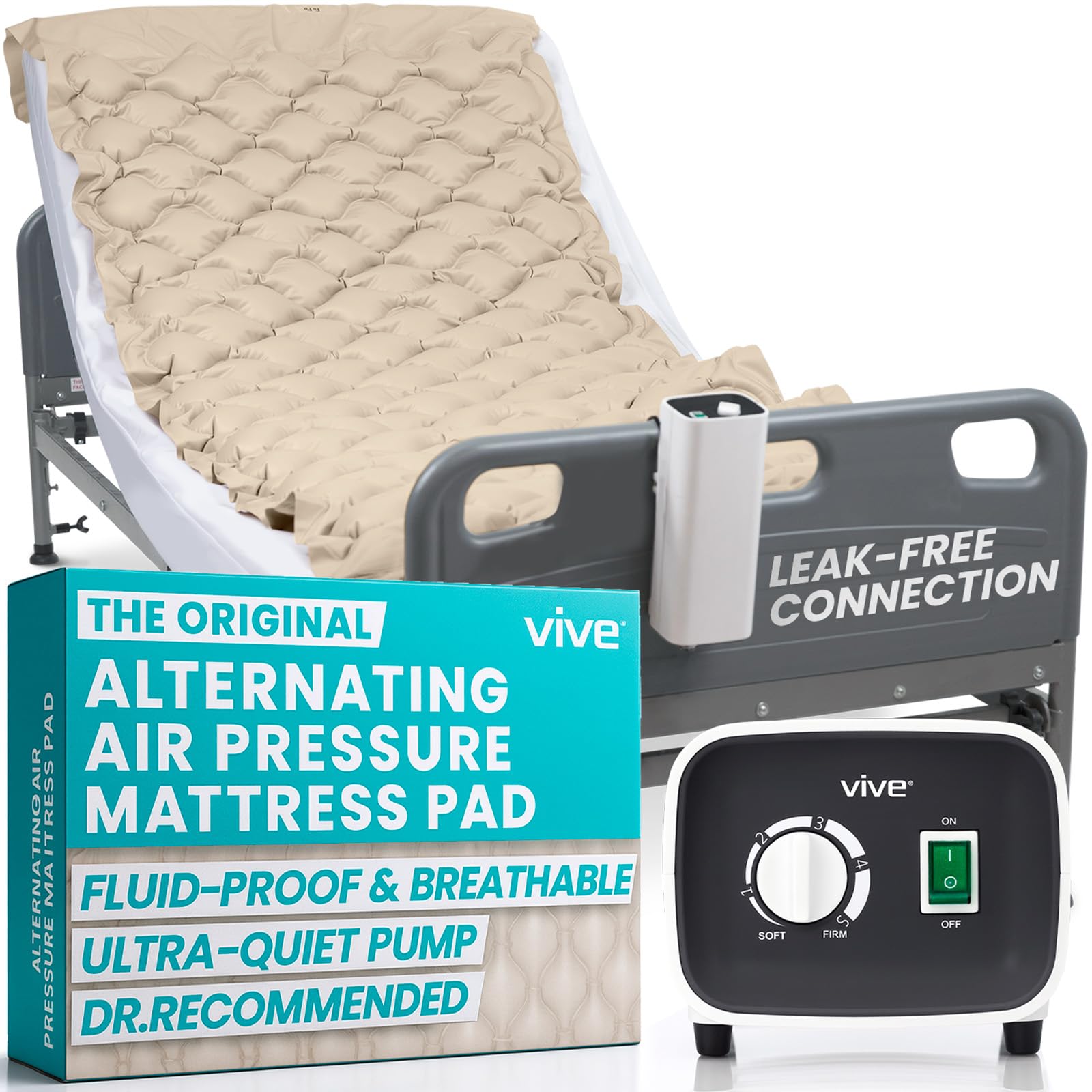
The Vive pad is the closest you get to a hospital-grade alternating pressure system at home. Its 130 independent air cells are heat-sealed to prevent leaks, and the proprietary algorithm cycles inflation and deflation in a wave pattern that continuously shifts the patient’s pressure points. The pump runs at 22 dBA—audibly quieter than a library—and supports up to 300 pounds with a fully customizable pressure knob.
Caregivers report visible improvement in existing stage 1 and early stage 2 bed sores within days of use. The waterproof vinyl top layer handles incontinence and wound drainage without absorbing moisture, and the included repair patches extend the unit’s life past the one-year guarantee. The 6-minute cycle is brisk enough for active therapy but the pressure can be turned down for sleeping patients who are more sensitive to motion.
Installation is straightforward: the top and bottom flaps tuck between mattress and frame to prevent sliding, and the flexible air hoses crimp less than stiff PVC alternatives. One minor consideration—the vinyl surface can trap heat, so layering a cotton fitted sheet on top improves comfort without compromising pressure relief. For comprehensive, doctor-recommended bed sore prevention, this is the benchmark.
Why it’s great
- 130 heat-sealed cells create fine pressure zone segmentation
- 22 dBA pump is quietest in this class
- Waterproof, easy-to-clean vinyl with included repair kit
Good to know
- Vinyl can feel warm without a cotton sheet barrier
- Pressure knob lacks numbered settings for precise repeatability
2. Lunderg Alternating Air Pressure Mattress Pad
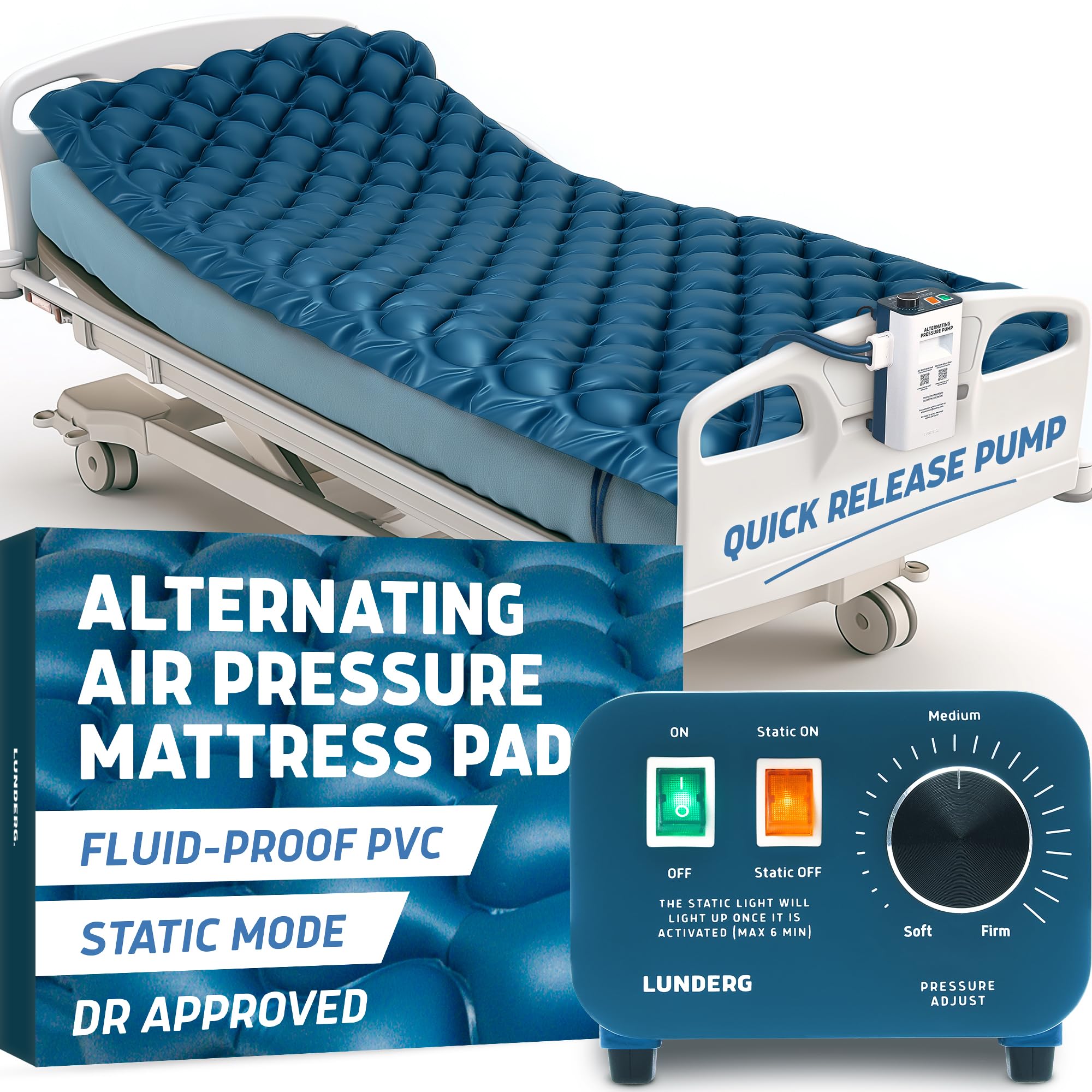
The Lunderg pad introduces a feature rarely seen at this price point: a Static Mode that keeps all cells fully inflated, giving the patient a break from the alternating movement. This is a practical solution for bedridden individuals who need pressure relief during waking hours but prefer a stable surface for deep sleep. The pump operates at 23 dBA—nearly silent—and uses a quick-connector system that simplifies setup and hose attachment.
Each cell is heat-sealed PVC, and the pad supports up to 300 pounds. The pressure knob ranges from soft to firm, and the full inflation cycle takes about 20 minutes across three cycles, after which you can dial down to the ideal firmness. Patients with sacral or trochanter wounds report reduced turning frequency and less pain upon waking when using the alternating mode.
Doctor and therapist approval backs the design, and the waterproof surface holds up well for long-term use. The main trade-off is that the 23 dBA pump, while very quiet, emits a slightly higher pitched hum than the Vive unit—some users may prefer the lower tone of the Vive for overnight use. That said, the Static Mode gives this pad a versatility that pure alternating units lack.
Why it’s great
- Static Mode offers non-alternating comfort for sleep
- Quick-connector hoses for easy setup
- Doctor and therapist recommended design
Good to know
- Pump hum is slightly higher-pitched than competitors
- Single pressure knob lacks numbered increments
3. Kekoy Alternating Air Pressure Mattress Pad (Blue)
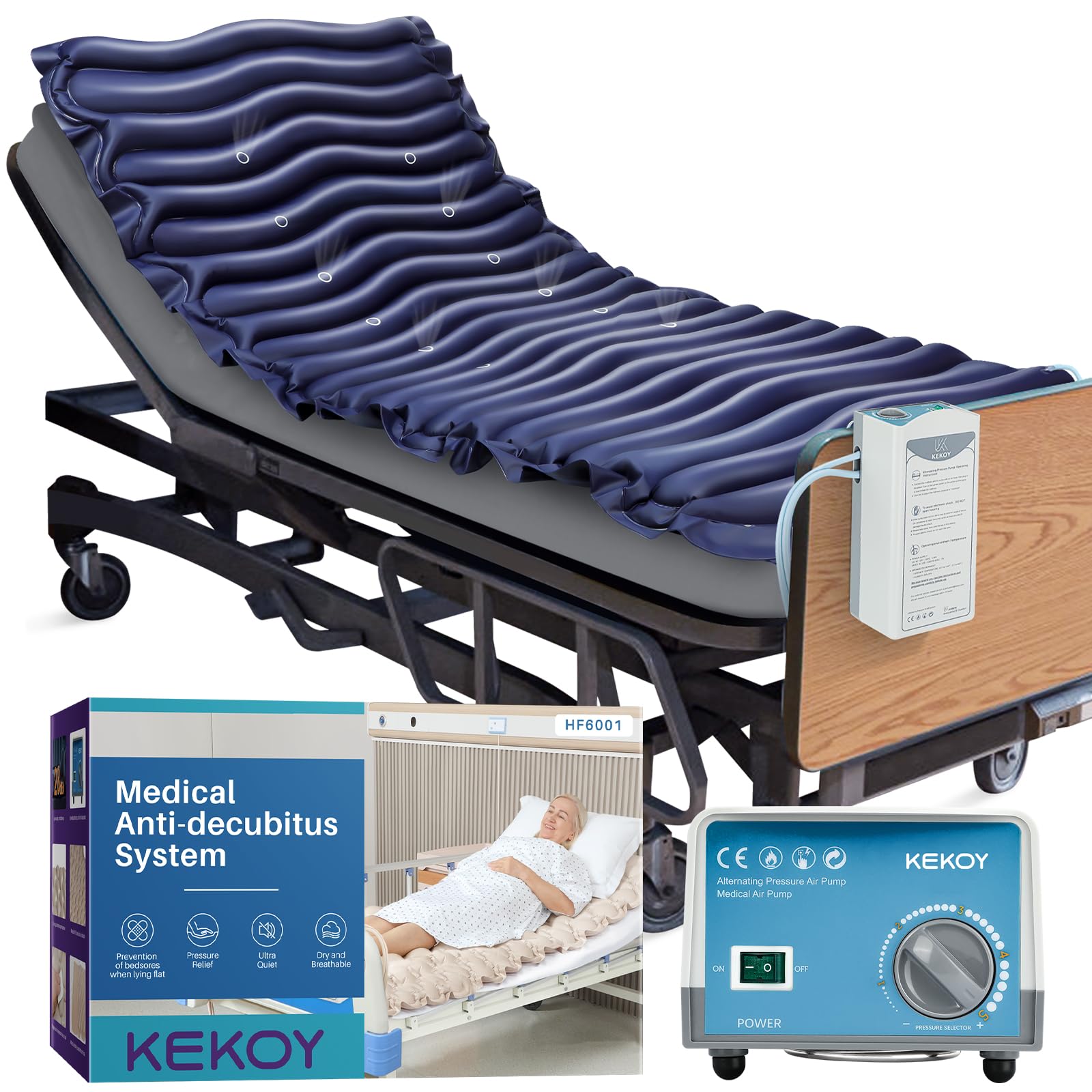
Kekoy’s blue pad addresses a common complaint with vinyl alternating pads: night sweats. The surface incorporates breathable micro air vents that create a gentle airflow layer between the patient and the PVC, significantly reducing moisture buildup compared to standard vinyl tops. This is critical for bed sore management because macerated skin is far more vulnerable to breakdown than dry skin.
The pad uses 130 independently sealed cells that cycle every 10–12 minutes—slightly slower than the Vive unit but still within the therapeutic window for pressure offloading. The pump offers 5 pressure levels (1 softest, 5 firmest) with a numbered dial, allowing precise repeatability across shifts or caregiver changes. Noise output checks in at under 28 dBA, which is quieter than a typical ceiling fan.
Weight capacity is 300 pounds, and the kit includes a patch kit, air hoses, and user manual. The pad inflates to 75 x 36 inches after unpacking. Patients recovering from spinal surgery or paraplegia report the micro vent system noticeably improves sleep quality compared to standard alternating pads. The trade-off is the slower cycle may not provide enough frequency for advanced stage 3 ulcers.
Why it’s great
- Micro air vents reduce heat and moisture buildup
- 5 numbered pressure levels for precise adjustment
- FSA and HSA eligible purchase
Good to know
- 10–12 minute cycle is slower than 6-minute competitors
- Requires constant power; deflates when unplugged
4. Kekoy Alternating Air Pressure Mattress Pad (Beige)

This Kekoy beige variant delivers essentially the same clinical core—130 air cells, 5 pressure modes, and a 28 dBA pump—as the blue version but without the micro air vents. That makes it a more budget-conscious choice for facilities or home care where the patient’s skin integrity is managed with frequent repositioning and barrier creams rather than passive airflow.
The 10–12 minute cycle remains effective for preventing pressure buildup on the sacrum, heels, and elbows. Caregivers report that bed sores on paraplegic patients begin showing improvement after 3–5 nights of consistent use. The waterproof medical-grade PVC is heat-resistant and easy to wipe clean of bodily fluids. The pump’s aluminum construction is quieter and more durable than plastic-bodied pumps in this price range.
Setup requires laying the deflated pad on the mattress with air connections at the foot or head, then plugging in—the pad self-inflates over roughly 20 minutes. The 67-inch power cord and 47-inch air hose provide good reach around hospital bed frames. The beige color blends better into home decor than stark white medical pads, but the lack of micro vents means it retains more body heat than the blue version.
Why it’s great
- 130 cells with 5 pressure modes for personalized therapy
- Aluminum pump runs quieter than plastic alternatives
- FSA/HSA eligible at a very accessible entry point
Good to know
- No micro air vents; can trap heat
- Constant power required; deflates promptly when unplugged
5. EGOHOME 3 Inch Gel Memory Foam Mattress Topper

The EGOHOME topper represents the static foam option for patients who are mobile enough to shift weight independently but need extra cushioning over existing pressure points. The 3-inch gel memory foam conforms to body contours while the gel infusion pulls heat away from the skin, making it a reasonable choice for a stage 1 prevention strategy or for long hours in a recliner.
The topper is CertiPUR-US and OEKO-TEX certified, ensuring no harmful VOCs or heavy metals in the foam core. The removable polyester cover zips off for machine washing, which is a hygiene advantage over one-piece foam toppers. A non-slip bottom and four elastic straps keep the pad anchored on the mattress, even with restless sleepers or during transfers.
However, static foam cannot replicate the offloading cycle of an alternating air pad. For any patient who cannot self-reposition every 2 hours, this foam topper will maintain the same capillary pressure indefinitely on bony prominences. It works best as an adjunct layer on top of an alternating air pad or for very low-risk patients who simply need a softer sleep surface.
Why it’s great
- Gel cooling technology minimizes heat retention
- Removable, machine-washable polyester cover
- OEKO-TEX and CertiPUR-US certified for safety
Good to know
- Static pressure—does not actively offload like air pads
- Not suitable for immobile patients at risk of stage 2+ ulcers
6. Lucid 4 Inch Gel Memory Foam Mattress Topper
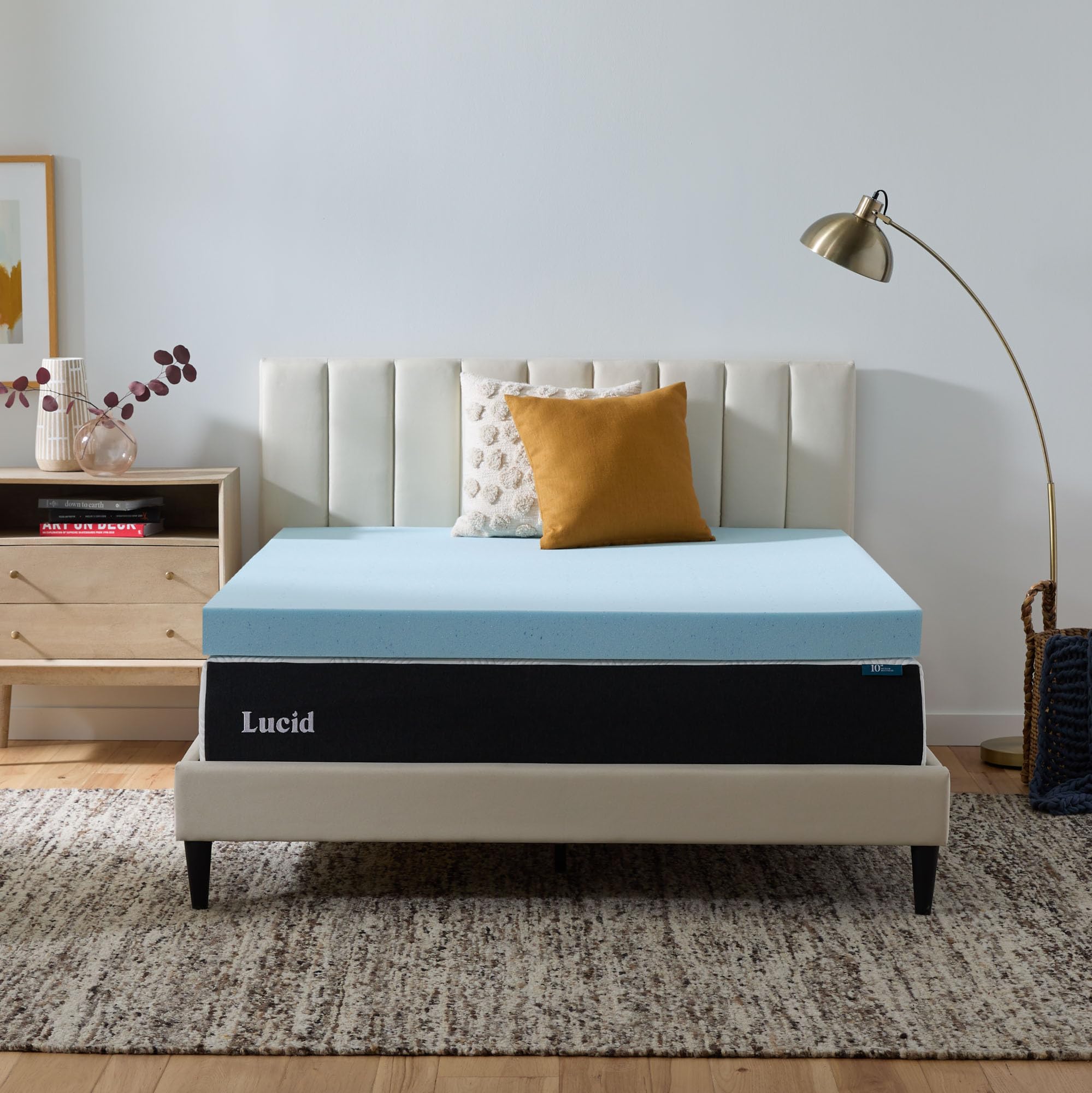
The Lucid topper brings 4 inches of gel-infused memory foam to the table, creating an ultra-plush sink-in feel that can help alleviate discomfort on existing pressure areas for patients with some mobility. The cooling gel and precision-cut ventilation channels are designed to offset the heat retention typical of thick foam layers, keeping the surface temperature more neutral than standard memory foam.
CertiPUR-US certification applies, and the topper ships compressed in a box—allow 24–48 hours for full expansion. The satin-like cover feels noticeably smoother than standard cotton covers, and the 3-year warranty against manufacturer defects provides long-term assurance. Four inches of foam provides substantial cushioning that conforms around the sacrum and hips.
But again, the clinical limitation is static pressure. For a bedridden patient who cannot reposition, this 4-inch foam layer does nothing to change the pressure gradient across the sacrum over time. It is a comfort upgrade for someone who can roll over but finds their existing mattress too hard. For active bed sore prevention in immobile patients, it should be used only as a top layer over an alternating air pad.
Why it’s great
- 4 inch depth provides exceptional plush cushioning
- Cooling gel + ventilation channels reduce heat buildup
- Backed by a 3-year manufacturer warranty
Good to know
- Static foam—no active pressure redistribution
- Requires 24–48 hours to fully decompress after unboxing
7. ZINUS 3 Inch Green Tea Memory Foam Mattress Topper

The ZINUS Green Tea topper is the most accessible static foam option on this list. The green tea and charcoal infusion helps neutralize odors—a practical advantage for long-term use where hygiene is a concern. The 3-inch memory foam layer provides soft body-conforming support that can relieve point pressure for a person who can shift weight during sleep.
CertiPUR-US certification verifies the foam’s safety, and the compact Wonderbox packaging minimizes the carbon footprint of shipping. The universal fit works under any standard fitted sheet, and the 3-year warranty is competitive for the price tier. Customer feedback consistently emphasizes the cloud-like feel and the improvement in back and hip pain for mobile users.
Like all static foams, this topper is not a clinical bed sore intervention for an immobile patient. The foam contours to the body, which can actually increase pressure on the sacrum by creating a “hammock effect” rather than distributing load. For a fully bedridden individual, this topper should be avoided unless it is used strictly as a comfort layer on top of a functioning alternating air pad.
Why it’s great
- Green tea and charcoal infusion controls odors
- Soft, body-conforming memory foam feel
- Backed by 3-year warranty with CertiPUR-US safety
Good to know
- Static foam may hammock around bony areas
- Not suitable as sole pressure relief for immobile patients
FAQ
Can a memory foam topper alone prevent bed sores in an immobile patient?
How often should the alternating pressure cycle run for stage 1 bed sores?
Is an alternating air pad safe for a patient weighing less than 100 pounds?
Final Thoughts: The Verdict
For most users, the mattress topper for bed sores winner is the Vive Alternating Air Pressure Mattress Pad because it combines the highest cell count, the quietest pump, and a doctor-recommended design that has been validated in thousands of home care settings. If you want the flexibility of a static mode for sleeping, grab the Lunderg Alternating Air Pad. And for a patient prone to night sweats who needs the added airflow of micro vents, nothing beats the Kekoy Blue Alternating Air Pad.