A fall at home doesn’t just risk a broken bone — it risks hours of helpless waiting if you can’t reach a phone. A medical alert necklace solves that gap by putting a dedicated SOS button within instant reach, whether you’re in the garden, the shower, or on a walk. This guide compares seven neck-worn devices that bring 24/7 emergency monitoring, GPS location, and automatic fall detection into a single wearable pendant.
I’m Emma — the founder and writer behind Baby Bangs. I’ve spent the last four years dissecting the hardware specs, monitoring networks, and real user experiences behind senior safety devices to separate reliable hardware from services that leave you stranded.
This guide breaks down the critical specs, monthly subscription structures, and fall-detection accuracy of each model so you can confidently choose the best medical alert necklace for independent living without hidden fees or unreliable response times.
How To Choose The Best Medical Alert Necklace
Before you click “buy,” three specs determine whether a pendant actually protects your loved one or just becomes an expensive piece of jewelry: the cellular carrier, the fall-detection sensor type, and the true monthly cost including optional features. Here’s what to look for.
Cellular Coverage & GPS Reliability
Every mobile necklace uses a cellular chip to reach the monitoring center. Devices locked to a single carrier (Verizon or AT&T) can become useless if the wearer lives in a rural area where that carrier has weak signal. A 4G LTE device with omniSIM technology automatically switches to the strongest available network, keeping the SOS button active in more locations. Also check whether the GPS updates in real time through a caregiver app or only when the monitoring center manually requests a location — some budget units only provide coordinates after an emergency call.
Fall Detection: Accelerometer vs. Manual
True automatic fall detection relies on a multi-axis accelerometer that measures sudden deceleration and impact angle. Top-tier pendants can detect a forward stumble, a sideways tip, and even a slow slide off a chair. Devices that only offer a manual SOS button without fall detection require the user to press the pendant after a fall — which is impossible if they lose consciousness. Confirm whether fall detection is included in the base monthly fee or added as a premium upgrade costing extra each month.
Battery Life & Charging Routine
A necklace that needs charging every 24 hours creates a dangerous gap when the user forgets to dock it. Look for a unit with at least 3–5 days of real-world battery life and a charging dock that doubles as a help button — that way the pendant stays topped up overnight without the user needing to plug in a cable. The best models use a simple drop-in cradle that charges via USB-C, and the device sends push alerts to the caregiver app when battery drops below 20%.
Quick Comparison
On smaller screens, swipe sideways to see the full table.
| Model | Category | Best For | Key Spec | Amazon |
|---|---|---|---|---|
| Medical Guardian MGMini | Premium | OmniSIM network switching | 5-day battery, omniSIM | Amazon |
| Safety+ 4G by Connected Caregiver | Premium | Zero-cost fall detection included | Under 9 sec response time | Amazon |
| 321 Alert Mini X2 | Mid-Range | Budget monthly subscription | 6-day battery, 4G LTE | Amazon |
| Bay Alarm Medical SOS Mobile | Mid-Range | Verizon 4G LTE coverage | 6-day battery, 4G LTE | Amazon |
| Lively Mobile2 | Premium | Waterproof design | Waterproof, 16 oz weight | Amazon |
| ADT On-The-Go Mobile | Premium | Trusted 150-year brand | AT&T 4G network | Amazon |
| SecuLife Fall Alert Pendant | Budget | Geo-fence safe zones | 6-day battery, waterproof | Amazon |
In‑Depth Reviews
1. Medical Guardian MGMini
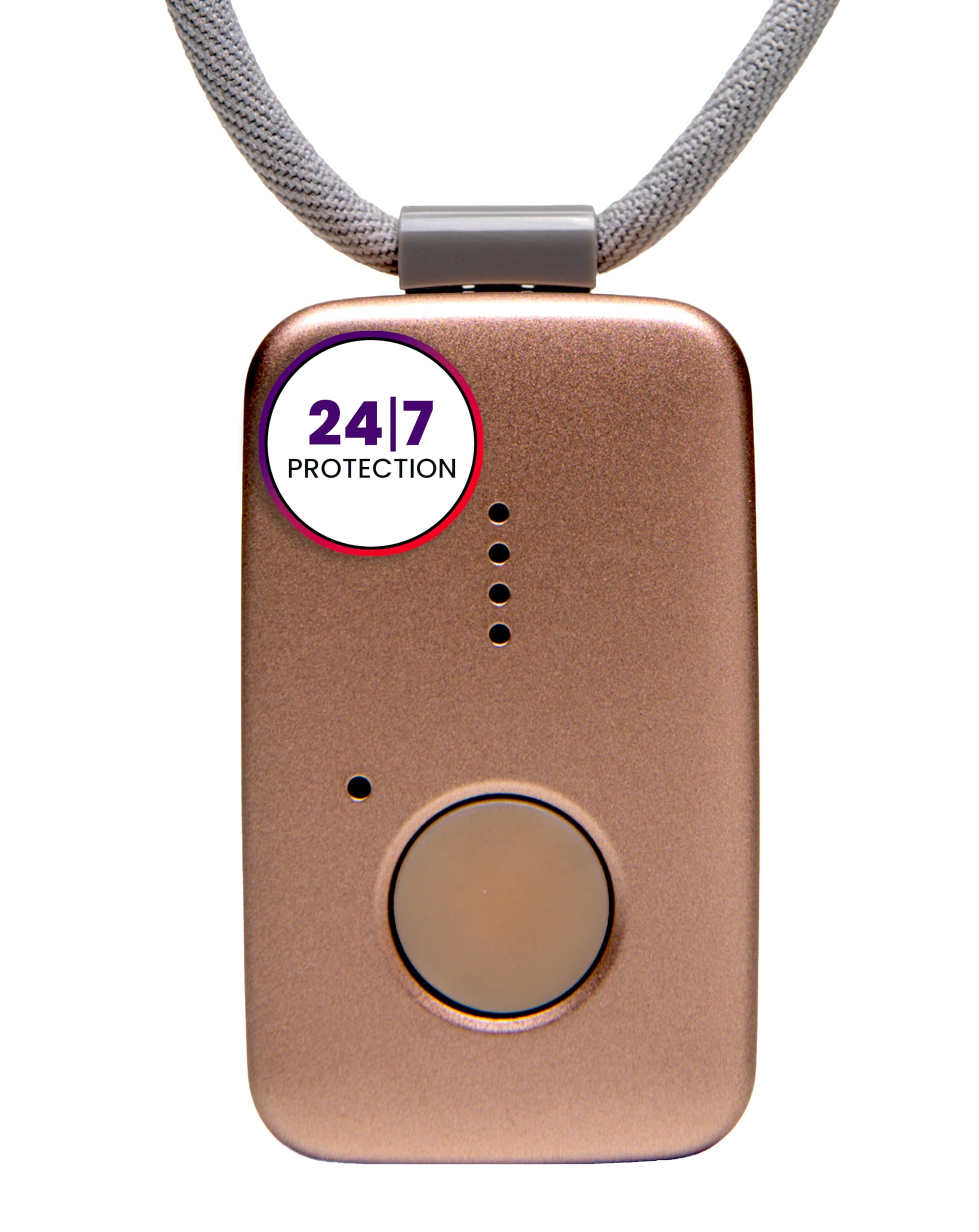
The MGMini earns the top spot because its omniSIM technology automatically hunts the strongest cellular signal — switching between Verizon, AT&T, and T-Mobile bands without any user input. This matters when your loved one travels between urban and rural areas, because the SOS button stays connected even if one carrier drops out. The rose-gold metal enclosure is also the most attractive in this category, designed to feel like a piece of jewelry rather than a medical device.
At 5 days of real-world battery, the MGMini outlasts most rival pendants, and the included lanyard and belt clip offer two wearing choices. The caregiver app provides step tracking and push notifications when the user tests the device monthly. Call response is handled by Medical Guardian’s U.S.-based operators, who have supported over 625,000 subscribers. Fall detection is optional and adds an extra monthly fee — but the core SOS button and GPS tracking are reliable enough that many buyers skip the upgrade.
One critical detail: the GPS coordinates are not available directly through the user’s app in real time; you must call customer service to request a location ping. This limits the “live tracking” feel for families who want to check in spontaneously. The activation process also requires a phone call rather than a fully online setup, which adds friction on day one.
Why it’s great
- OmniSIM provides best-in-class cellular coverage switching
- Premium rose-gold finish feels like jewelry
- 5-day battery reduces charging frequency
Good to know
- GPS pin requires calling customer service — no live app feed
- Fall detection costs extra per month
2. Safety+ 4G by Connected Caregiver
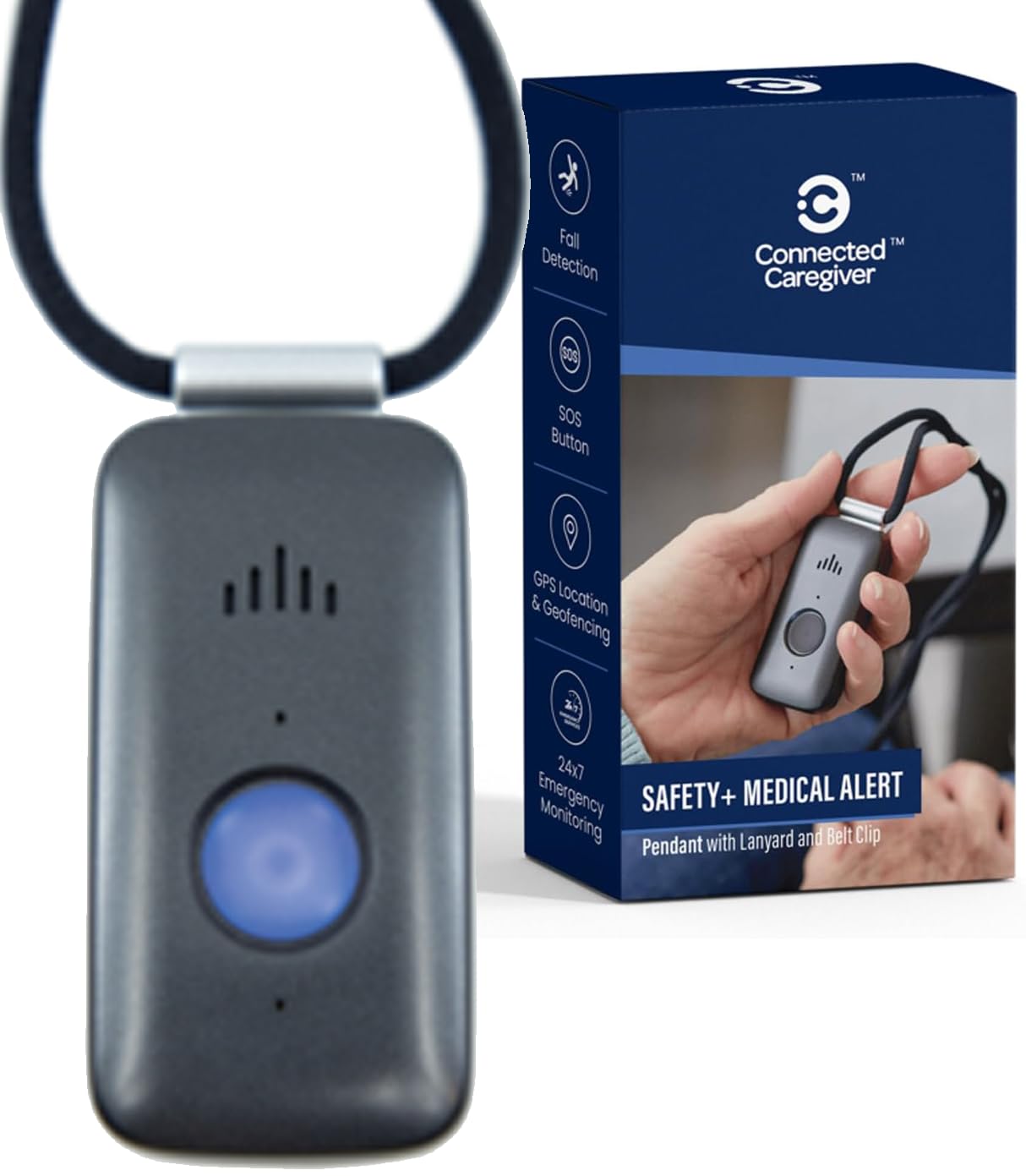
The Safety+ 4G includes automatic fall detection at no extra charge — a rarity in this category where most competitors charge an additional fee. The fall sensor uses a multi-axis accelerometer that detects impact patterns and orientation changes, not just vertical drops. Connected Caregiver reports a response time under 9 seconds on average, and the device uses 4G nationwide coverage that does not require a smartphone or home base station.
The caregiver app is the standout feature here: you get a live dashboard showing the user’s real-time GPS location, step count, morning activity window, and battery level. Push notifications fire instantly when the SOS button is pressed or a fall is detected, and you can create a “Care Circle” so multiple family members receive alerts simultaneously. The charging dock has a built-in help button, so the pendant can still be used during recharge — a thoughtful touch for overnight safety.
On the downside, some users report spotty cellular signal in basement-level homes or extremely rural areas, and the device is not omniSIM — it relies on a single carrier. A few customer reviews mention billing confusion around the “free first month” where the system auto-converts to a paid contract. Read the cancellation terms carefully before activating.
Why it’s great
- Fall detection included at no monthly premium
- Comprehensive caregiver app with live GPS and alerts
- Under 9-second average response time
Good to know
- Not omniSIM — single carrier may struggle in weak-signal zones
- Billing auto-converts after free month; cancel carefully
3. 321 Alert Mini X2
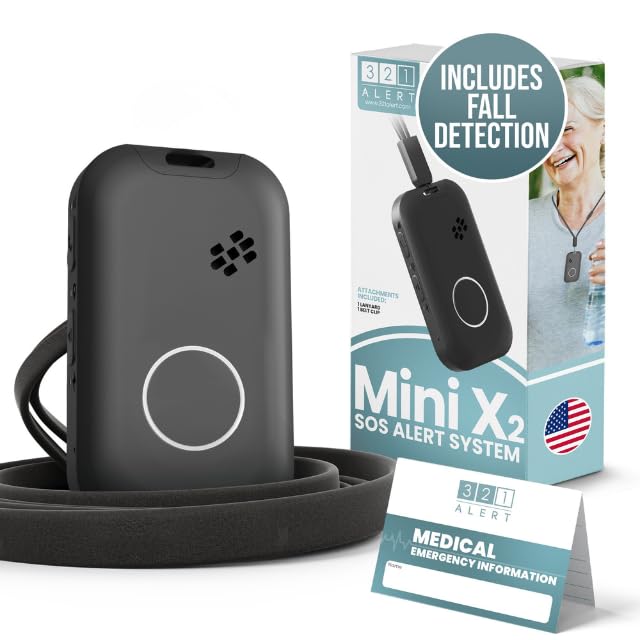
The Mini X2 offers the lowest monthly subscription in this roundup, making it the strongest budget-tier competitor for seniors on fixed incomes. Despite the entry-level monthly fee, it still packs 24/7 monitoring, automatic fall detection (optional but affordable), and real-time GPS tracking over 4G LTE. The device body is enlarged with a textured grip, specifically designed for arthritic hands — a thoughtful ergonomic choice that many slim pendants overlook.
Battery life reaches up to 6 days depending on feature usage, and the charging dock includes a built-in help button so the necklace can still summon assistance while charging. The lanyard has a magnetic clasp for easy breakaway in case of snagging, and the unit is water-resistant for shower and rain exposure. Activation is straightforward: call the service line, and operators adapt the device for users with speech difficulties, as confirmed by multiple verified reviews.
Connectivity is locked to a single cellular carrier, and some users in fringe coverage areas report delayed GPS location reports. The charging cradle can be finicky — the device must be seated perfectly on the pins or it won’t charge overnight. No caregiver app is available for family members to track location independently; only the monitoring center can provide GPS coordinates on request.
Why it’s great
- Lowest monthly subscription across all seven models
- Arthritis-friendly ergonomic design
- 6-day battery life reduces daily charging
Good to know
- No caregiver app for family location tracking
- Charging cradle alignment can be inconsistent
4. Bay Alarm Medical SOS Mobile

Weighing less than 2 ounces, the Bay Alarm SOS Mobile is the lightest pendant in this comparison — a critical advantage for seniors who resist wearing anything around their neck. It runs on Verizon’s 4G LTE network, which offers the most reliable rural coverage among single-carrier pendants. The IP67 water resistance rating means it survives submersion in up to 1 meter of water for 30 minutes, making it safe for full shower use.
The optional caregiver app lets family members view the user’s location, battery level, and step count, though the app interface is less polished than Connected Caregiver’s dashboard. Bay Alarm Medical uses U.S.-based dispatch centers with no hidden fees for emergency calls, and the device does not require a smartphone or home base station to function. The lanyard features a magnetic breakaway clasp and a separate belt clip is included for wardrobe variety.
Because the device is carrier-locked to Verizon, users in areas where AT&T or T-Mobile provides stronger signal may experience delayed connection times. Some users also note that the device emits a blinking LED during charging that elderly wearers find distracting or confusing at night. The battery life is rated up to 6 days, but heavy GPS polling can drain it to 4 days in practice.
Why it’s great
- Ultra-lightweight design ideal for reluctant wearers
- IP67 waterproof rating for full submersion safety
- Reliable Verizon 4G network for rural coverage
Good to know
- Blinking LED during charging can be distracting at night
- Carrier-locked — no network fallback if Verizon is weak
5. Lively Mobile2

The Lively Mobile2 is the only device in this list with touch controls — a touchscreen interface that allows the user to confirm an alert or silence a false alarm without shouting. It is certified waterproof, not just water-resistant, meaning it functions after full immersion in a pool or bathtub. Lively’s certified agents answer in under 30 seconds on average, and the device uses a 4G LTE cellular connection that does not need a landline or base station.
Fall detection is available as a monthly add-on, and when triggered, the device can automatically dial a loved one before EMS if the user responds that they are okay. The caregiver app sends automated notifications to family during emergencies, and the unit’s dock charges via a simple magnetic puck. The design is the most modern of the group, slim enough to slip into a pocket or purse if the user dislikes necklace wear.
The touchscreen is a double-edged sword — seniors with arthritis, tremors, or low dexterity may accidentally trigger or cancel alerts. Battery life is significantly shorter than the competition, requiring nightly charging to maintain full readiness. Some users also report that the volume is lower than earlier Lively models, which makes hearing the operator difficult for users with hearing aids.
Why it’s great
- Fully waterproof — safe for pools and tubs
- Touchscreen interface for confirming or cancelling alerts
- Fast operator response time under 30 seconds
Good to know
- Touchscreen can be tricky for users with tremors
- Battery requires daily charging
6. ADT On-The-Go Mobile

ADT brings 150 years of security monitoring experience to this pendant, and it shows in the dispatch protocol: agents are trained specifically in senior sensitivity and provide step-by-step updates to emergency contacts during an incident. The On-The-Go Mobile runs on AT&T’s 4G LTE network and includes a waterproof wristband and necklace in the box, giving the user two wearing options from day one.
Fall detection is built into the pendant and automatically triggers an alert when the accelerometer detects a sudden deceleration. The device weighs only 1.76 ounces, making it one of the lighter options, and the battery lasts up to 40 hours — shorter than the 5–6 day leaders, but ADT justifies this with a more frequent location ping that keeps GPS tracking tighter. The monthly subscription includes all monitoring features with no add-on fees, and there are no long-term contracts.
The 40-hour battery life is a real limitation — users who forget to charge every other night risk an unpowered device. The pendant is also locked to AT&T’s network, which provides strong urban coverage but can falter in deep rural areas. Customer reviews are sparse, making it harder to gauge real-world reliability compared to more-reviewed models.
Why it’s great
- ADT’s 150-year legacy in security monitoring
- Waterproof wristband and necklace included in box
- Senior-sensitivity trained dispatch agents
Good to know
- 40-hour battery requires charging every other night
- Limited real-world user reviews available
7. SecuLife Fall Alert Pendant
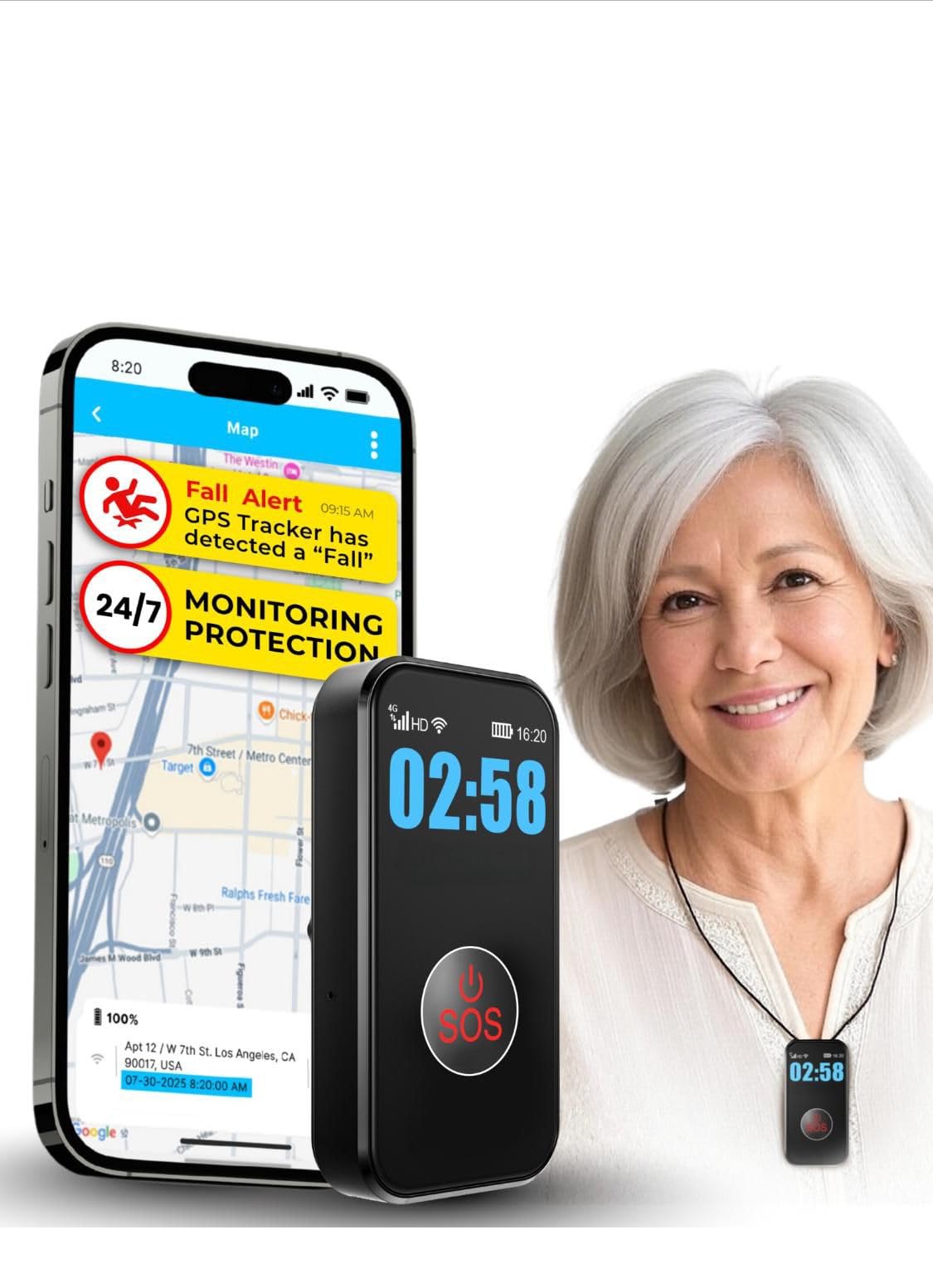
The SecuLife pendant introduces geo-fencing — a feature not found on the other models here. You can draw custom safe zones on a map through the app, and the device sends a push alert when the user leaves or enters those boundaries. This is hugely practical for caregivers who worry about wandering behavior associated with dementia. The unit is IP67 waterproof, runs on 4G LTE, and includes a large SOS button with a clear OLED display showing time, battery, and signal strength.
Two-way calling works like a mini cell phone: the user can press SOS to call pre-programmed contacts directly, and those contacts can call the pendant to speak hands-free. Battery life is rated up to 6 days with 1-hour interval tracking, which reduces location update frequency to stretch power. The 1000 mAh battery is the largest capacity in this comparison, and the subscription starts at a competitive monthly rate with no long-term contract.
Some verified reviews report that the fall detection failed to trigger during a real fall, and the SOS button was unresponsive in that instance — a serious reliability concern that should make buyers weigh the cheaper subscription against the risk of non-activation. The device is locked to a single carrier, and users in extremely remote areas have reported connection delays. The geo-fence feature also depends on the pendant having continuous cellular signal to update location.
Why it’s great
- Geo-fencing alerts for wandering prevention
- Large 1000 mAh battery with up to 6-day life
- Two-way voice calling direct to caregiver contacts
Good to know
- Reports of fall detection failing in real incidents
- Locked to single carrier; unreliable in fringe areas
FAQ
Can a medical alert necklace be used without a monthly subscription?
What happens if the pendant gets wet in the shower?
Does fall detection work if the wearer falls slowly or slides off a chair?
Can I test the pendant without calling emergency services?
How do I cancel a subscription if the device doesn’t work out?
Final Thoughts: The Verdict
For most users, the best medical alert necklace winner is the Medical Guardian MGMini because its omniSIM technology guarantees the strongest possible cellular connection in more locations than any single-carrier rival. If you want automatic fall detection included at no extra monthly charge, grab the Safety+ 4G by Connected Caregiver. And for family caregivers who need a geo-fence to track a loved one prone to wandering, nothing beats the SecuLife Fall Alert Pendant.